35 Machine Knitting Ideas: Sweaters, Blankets, Bags & Wall Art
A knitting machine turns an evening of hand knitting into about twenty minutes. That speed changes what is worth attempting: a whole blanket panel, a sweater front you can afford to reknit, six hats from one cone. The trade is that the machine has no judgment, so a tension error repeats itself perfectly all the way down.
Here are 35 machine knitting projects, each one shown, each with the part that actually catches people out. Work through them in order and you pick up colorwork, seaming and shaping along the way.
For projects worked by hand instead, this collection of knitting ideas pairs each one with the technique it builds, from cables to intarsia.
Sweaters, Cardigans and Wearables
Garments are where the machine earns its cost. A sweater front takes an hour, so a mistake costs an hour rather than a week. That changes how boldly you design.
1. Geometric Intarsia Cardigan

Big blocks of gold, rust and navy read cleanly at a distance because each shape is wide enough to survive the row gauge. Keep motifs chunky and the floats stay short. More charted options sit in these modern knitting patterns.
2. Dense Fair Isle Sleeve Panels

Sleeves are the hardest place to keep colorwork square, because you increase while the pattern repeats. Chart the increases into the motif instead of fighting them at the edge.
3. Floral Motif Longline Cardigan

Flower panels on a cream ground are patchwork you knit in one piece. Pin the front bands before seaming or the motif weight drags them out of line.
4. Marled Waistcoat in Handspun Tones

A vest is the fastest way to test a yarn at garment scale. Two rust strands fed together give depth with no charting, and the ribbed hem does the shaping.
5. Confetti Speckle Pullover

Speckled yarn does the decorating, so the stitch stays plain. Knit the body in stockinette and keep solid cream for cuffs, neckband and hem to frame the noise.
6. Four-Panel Color-Block Sweater

Coral, teal and mustard meet at right angles across the chest. Knit each block separately, match row counts exactly, then mattress-stitch so the joins disappear. There are 27 free knitted sweater patterns worth borrowing shaping from.
Hats, Mitts and Scarves
Small pieces finish in one sitting and teach tension fast. They also expose gauge drift, because a hat one stitch out per inch simply will not fit.
7. Cabled Beanie with a Fur Pompom

Cables mean hand-crossing stitches with a transfer tool every few rows. Slow, but the raised rope against flat ribbing is worth the interruptions.
8. Ribbed Camel Beanie with Yarn Pompom

Plain 2×2 rib is the beginner hat. Knit a rectangle, seam the back, gather the crown on a running thread, then hide the pull under a fat pompom. Same crown logic as most crochet hat ideas.
9. Deep-Brim Fisherman Beanie

The folded brim needs twice the rows you think. Knit the cuff tighter than the body so it grips instead of slouching after one wear.
10. Matching Hat and Cowl Sets

A hat and a cabled cowl from one cone keeps the dye lot identical. Sets sell better than singles and make easy Christmas knitting gifts.
11. Color-Block Fingerless Mitts

Two colors per mitt, swapped between the pair, means no chart and no waste. Hold a few needles out of work for a dozen rows to leave the thumb gap.
12. Fine-Gauge Textured Gloves

Gloves are the real test of gauge. Each finger is a tiny tube, so a half-stitch error compounds five times before you reach the cuff.
13. Patterned Winter Glove Pairs

Knit both gloves in one session. Tension drifts between days as room temperature shifts, and a mismatched pair is obvious the moment you wear it.
14. Rainbow Gradient Scarf

Change one cone at a time and the shifts look continuous. Abrupt swaps read as stripes; overlapping two strands for a few rows blends them. Compare the hand-knit route in these free knitting scarf patterns.
15. Ombre Wrap in Fine Yarn

The same gradient in a finer yarn drapes instead of standing up. Run a looser tension than a scarf so it folds softly over the shoulder.
Blankets and Throws
Nothing shows off machine speed like a blanket. The real work is planning: panel widths, seam placement, and matching row counts so blocking has a chance.
16. Baby Blanket with Knitted Animal Motifs

Teddies, deer and bunnies sit raised on a cream ground. Work them as separate shapes and sew them on, leaving nothing loose inside for small fingers.
17. High-Contrast Patchwork Throw

Magenta, purple and teal squares work because the stitch changes between them. Garter next to stockinette gives the eye an edge even where colors sit close.
18. Soft-Palette Squares Blanket

Mustard, navy and mint on cream is the calmer version. Knit every square to the same row count and blocking squares up the rest.
19. Scrap-Yarn Sampler Blanket

Every leftover cone becomes one square. Sort by value rather than hue before laying it out, or the darks cluster and the blanket looks lopsided. The layout maths matches crochet patchwork quilt blocks.
20. Wide-Stripe Machine Throw

Stripes are the fastest blanket a machine makes. Change color at the same edge every time and every tail lands on one side, ready to weave in at once.
21. Bold Block Blanket on the Bed

Wide panels knit lengthways halve the seaming. Fewer long strips beat many small squares when you want it finished this weekend.
22. Oversized Sofa Throw

Anything wider than the needle bed is knitted in panels. Plan seam lines to fall on a color change so they vanish into the design.
23. Mixed-Texture Comfort Blanket

Alternate smooth and nubbly yarns between panels. That weight difference is what makes a blanket feel handmade even at machine speed.
Bags, Totes and Storage
Knitted bags fail in predictable places, all fixable at the planning stage. Handles, base and lining separate a daily bag from one that sags by the second trip.
24. Structured Tote with Colorwork Band

A patterned band across the base hides the seam and stiffens the bottom. Line it with canvas or the knit sags the first time you fill it.
25. Color-Block Market Tote

Red, mustard, navy and green panels knitted flat, then seamed into a box. Double the yarn at the handles, where every knitted bag fails first.
26. Patchwork Tote with Contrast Handles

Pale handles against saturated blocks give the eye somewhere to rest. Knit the straps as narrow tubes so they hold shape under weight.
27. Everyday Shopper in Cotton

Cotton has no memory, so it keeps its shape where wool stretches. Knit tighter than the ball band suggests, the same trick that keeps crochet handbags from drooping.
28. Log Cabin Block Bag

Blocks arranged around a center square give structure without shaping. Each round of strips is knitted flat and seamed onto the last.
29. Folk-Pattern Tote with Pockets

Contrast outside pockets turn a plain tote into a project bag. Set them on while the panel is still flat, before seaming the sides.
30. Craft Tool Carrier

Deep and narrow suits scissors and hooks. Add a knitted divider so tools stand upright instead of collapsing to the bottom.
31. Studio Storage Baskets

The same construction, knitted shorter and stiffer, becomes a basket. Carry jute alongside the yarn on the base rows to keep the sides standing.
Knitted Wall Art and Home Pieces
Once the fabric is not going on a body, gauge stops mattering and texture takes over. Knit loose, add loops, let the surface do the talking.
32. Dimensional Landscape Wall Panel

Bouclé trees, wrapped flowers and tiny animals sit proud of the ground. Knit the background flat first, then build the relief on top.
33. Storybook Scene Hanging

Trees, a river and grazing sheep in candy colors. Sketch the scene at final size first so the horizon lands where you want it.
34. Winter Forest Textile Wall Hanging

One palette forces the design to carry on texture alone. White, tan and grey loops build the depth that color would normally do.
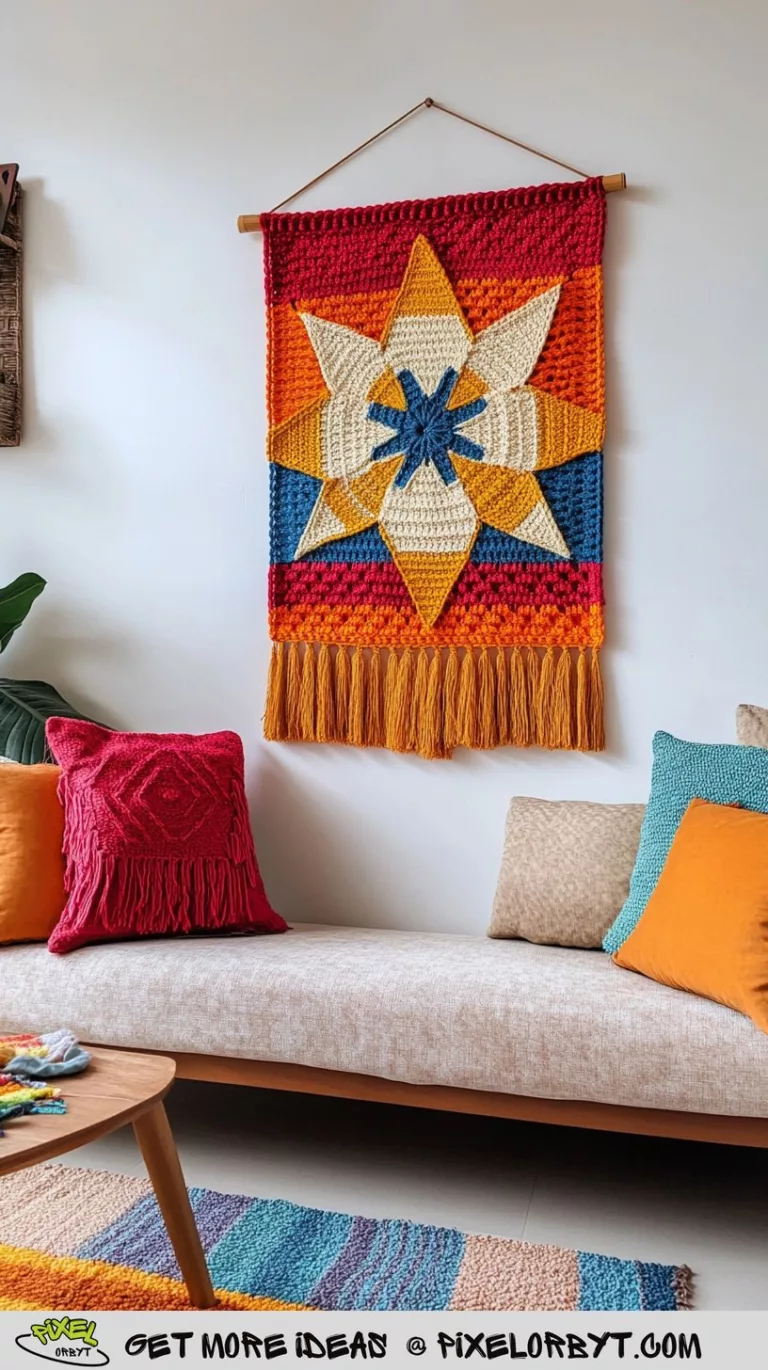
35. Neutral Statement Piece for a Blank Wall

Hang a heavy panel from a dowel rather than pinning it. Knitted fabric distorts within weeks if the weight loads a few points. Smaller loom knitting projects scale down neatly.
Machine Knitting FAQ
Can a knitting machine do ribbing on its own?
Only with a ribber attachment. A single-bed machine knits stockinette, and every rib stitch must be transferred by hand with a two-prong tool. Most people knit the body on the machine and accept that cuffs are slow.
What yarn weight works on a standard-gauge machine?
Standard gauge takes 4-ply and finer; DK or heavier jams the carriage. Chunky machines have wider needle spacing and handle worsted and aran, which is why blanket knitters buy bulky machines.
Why does my knitting drop off mid-row?
Almost always weight. Hang claw weights every few inches and move them up as the fabric grows. The other cause is a bent needle catching the yarn, so check the bed before blaming the tension dial.
Is a second-hand machine worth buying?
Usually yes. Brother and Silver Reed machines from the eighties still run once the sponge bar is replaced, a cheap part and the most common reason a bargain machine looks broken.
Before You Cast On
Three habits save more time than any technique:
- Swatch every new cone and write the tension number on the ball band. Yarn varies between dye lots more than you expect.
- Count rows, never measure length. Fabric relaxes off the machine and your ruler will lie.
- Weave in ends as each panel comes off. A basket of unfinished pieces is how projects die.
Pick the project you would least mind reknitting and start there. The machine rewards second attempts in a way hand knitting never can, and the fastest route to competence is the same hat four times in an afternoon.